The Steel That Protects Itself With Rust: What a Shipping Container Is Really Made Of
Date:
A container isn't built from ordinary iron. It's weathering steel — it rusts once, and after that the rust itself does the protecting. How it works, why architects clad buildings in it, and what actually decides a container's lifespan.
Not just a «steel box»
The body of a shipping container is made of weathering steel, known worldwide as COR-TEN. Chinese and Korean factories weld containers from grade SPA-H (JIS G3125), a direct equivalent of COR-TEN A, ASTM A242 and EN 10025-5. Yield strength ≥355 MPa, corrugated wall thickness 1.6–2.0 mm, with corners and frame considerably thicker.
It all comes down to chemistry: copper, chromium, nickel and — most importantly — an elevated phosphorus content. In ordinary structural steel phosphorus is treated as a harmful impurity; here it is added on purpose.
How the patina works
Ordinary steel rusts loosely. The oxide layer is porous, it flakes off, exposes fresh metal, and the process keeps going deeper — all the way to a hole.
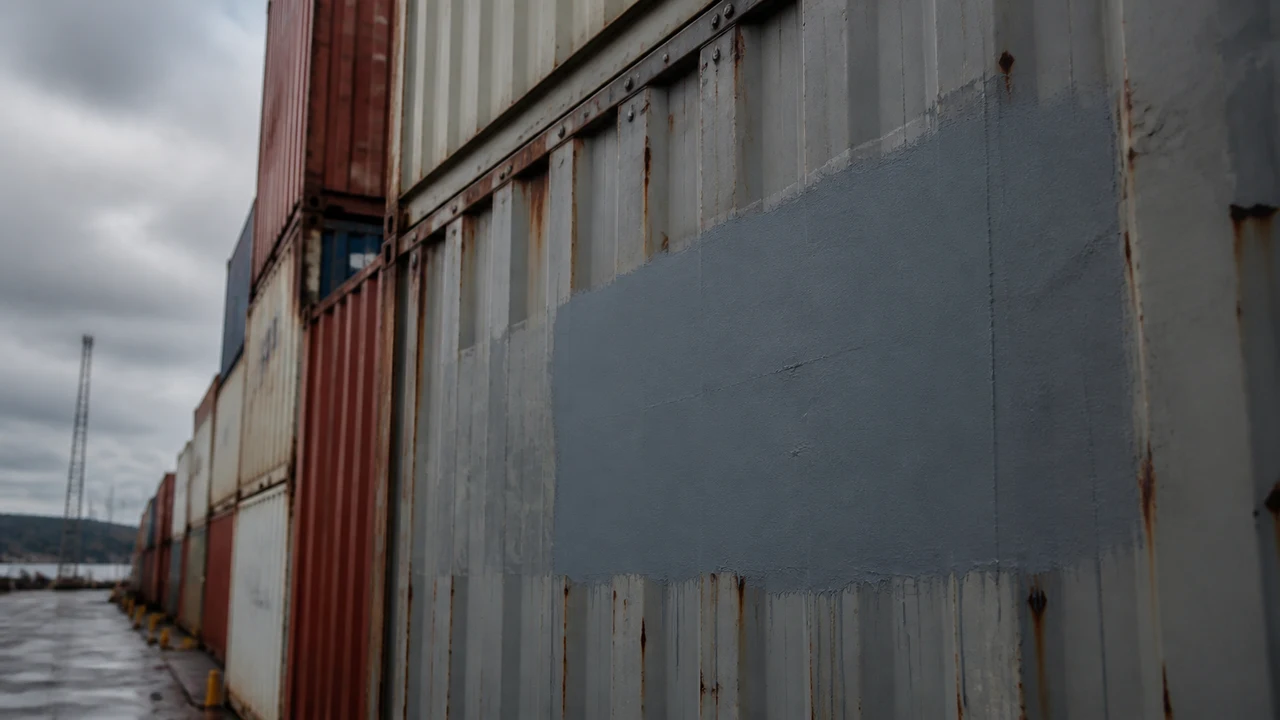
With weathering steel the first rust layer behaves completely differently. The alloying elements make it dense and tightly bonded to the metal, it blocks oxygen and moisture, and the corrosion rate drops 2–8 times compared with ordinary carbon steel.
There is one condition: the patina only forms where the surface alternately gets wet and dries out. That cycle is exactly what locks it in place. The grey-blue tone turns orange within weeks and dark brown over a few years.
Why architects fell for it
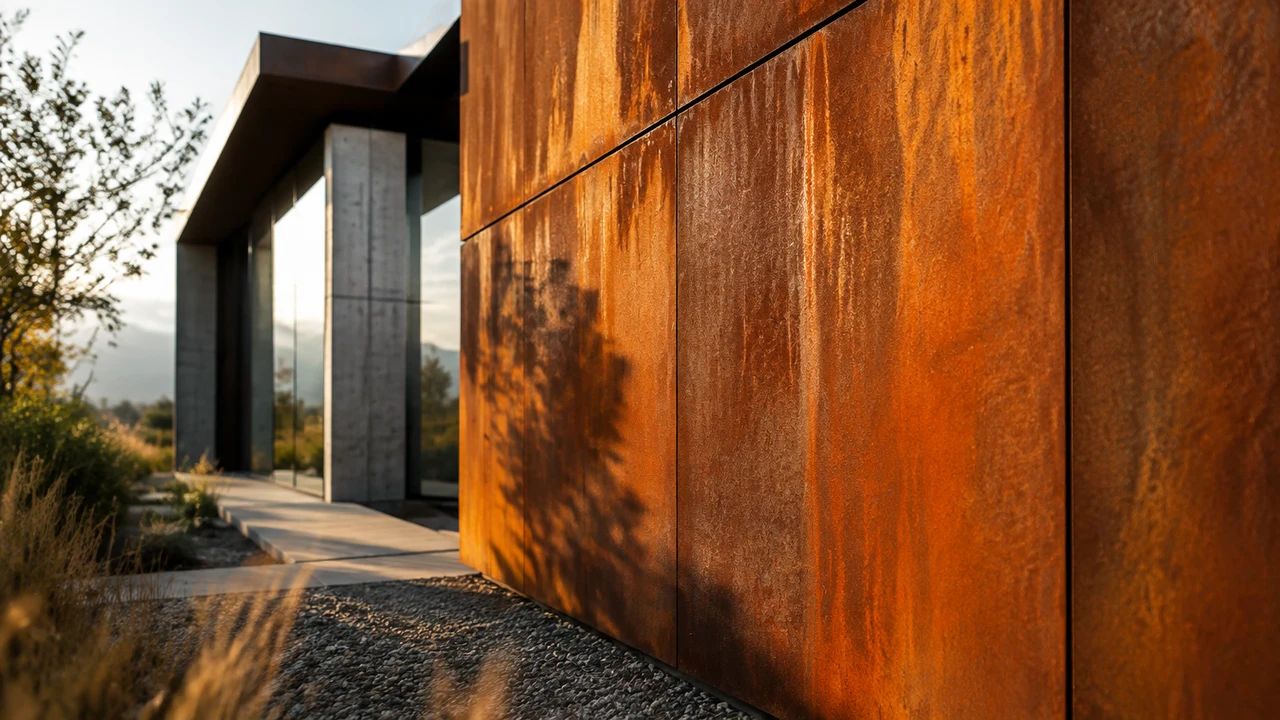
The same steel is used for building facades, sculptures, fences and landscape elements. The classics are the John Deere headquarters in Illinois (Eero Saarinen, 1964) and the Picasso sculpture in Chicago; today it’s hundreds of villas and museums.
The logic is identical to the container’s: it is never painted. No primer, no top coat, no repainting every seven years — the facade maintains itself. That’s where the fashion for «rusty» houses and garden beds comes from: the orange colour isn’t neglect, it’s the material doing its job.
A container is built for conditions your property will never have
This is the key point for any buyer.
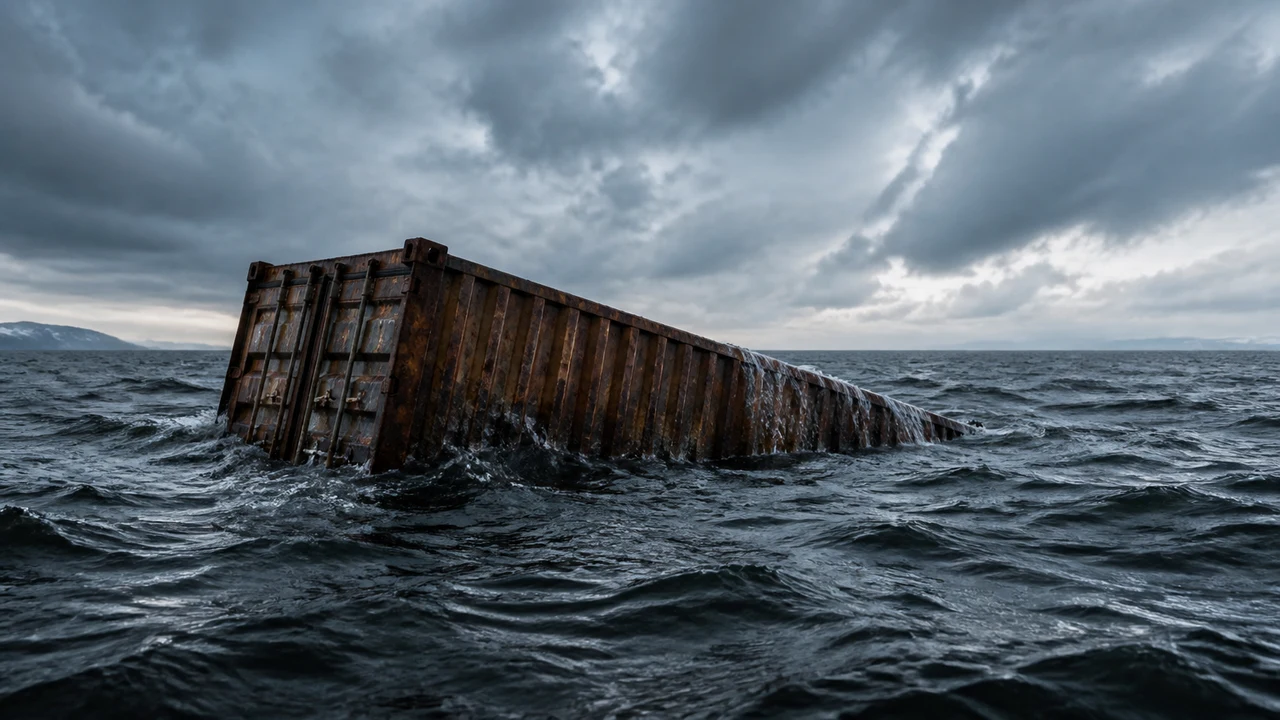
A shipping container was not designed for a back garden. Its daily routine is a ship’s deck in the Atlantic: constant salt mist and spray, a temperature swing from the tropics to sub-zero within a single voyage, wind and vibration, thirty tonnes of cargo inside and several equally heavy containers stacked on top.
Those are the conditions the design is based on: weathering steel, a factory epoxy primer with industrial enamel, and corrugation geometry that lets water run off instead of sitting.
Now compare that with a plot behind a house. Rain, snow, frost, sun. No salt mist, no rolling, no load from above, and the container itself usually stands empty or loaded to a tenth of its capacity. For a structure engineered for the ocean, that is an easy life.
That’s why fears of a container «rusting right through» on an ordinary property are unfounded. On shipping lines the standard service life in an aggressive environment is 12–15 years, and containers are usually retired because of age and the line’s commercial rules, not because of holes in the body. On land the same body lasts considerably longer.
What this means in the Baltic climate
November slush, March frost, summer sun — for weathering steel this is a normal working environment. The wet-and-dry cycle actually strengthens the patina.
The only thing that genuinely shortens the service life here isn’t the environment, it’s the installation:
- Water must not stand. The patina needs to dry out. If the underside stays permanently wet, you get ordinary corrosion instead of a protective layer.
- No direct contact with the ground. A container goes on supports — concrete blocks or piles — with an air gap and a slight slope for drainage. A container sunk into grass will fail from below in any climate.
- Condensation from inside. Insulate a container without a vapour barrier and ventilation and moisture will settle on the metal from within. Outside the box looks new; inside it weeps.
Set on supports, ventilated and properly drained, a container stands for decades.
In short
Orange rust streaks on a container are not the end — they’re proof that the material is doing exactly what it was designed to do, the same as an expensive weathering-steel facade on an architect-designed house. You don’t need to fight rust on a container. You need three things: supports, drainage and ventilation.
And that is precisely why a container on your property isn’t a stop-gap for a couple of seasons: it will outlive the timber shed you were planning to build instead. We’ve written separately about why a steel box beats construction in practice: A shipping container instead of a shed: why it’s the best solution for a house or summer cottage