From 2026, containers lost at sea can no longer be kept quiet
Date:
Since 1 January, SOLAS amendments require a ship's master to report every container lost at sea — including other companies' containers spotted adrift. We explain what changes in the industry and why it also matters to those buying a container on land.
For decades, container losses at sea were an area where precise figures simply did not exist. A ship ran into a storm, part of the cargo went overboard — and whether anyone ever found out depended on the carrier’s goodwill. As of 1 January this year, that era is over.
What exactly came into force
The International Maritime Organization (IMO), through resolution MSC.550(108), amended regulations 31 and 32 of Chapter V of the SOLAS Convention. The amendments took effect on 1 January 2026 and establish a clear duty: the master of a ship must report every container lost at sea without delay.
The key nuance is that the reporting duty also covers other parties’ containers. If a ship spots a drifting container that is not part of its own cargo, it must report it all the same. The information goes to ships in the vicinity, the nearest coastal state and the flag state. The report must state the position, the number of containers and whether the cargo is dangerous.
Why this is not red tape
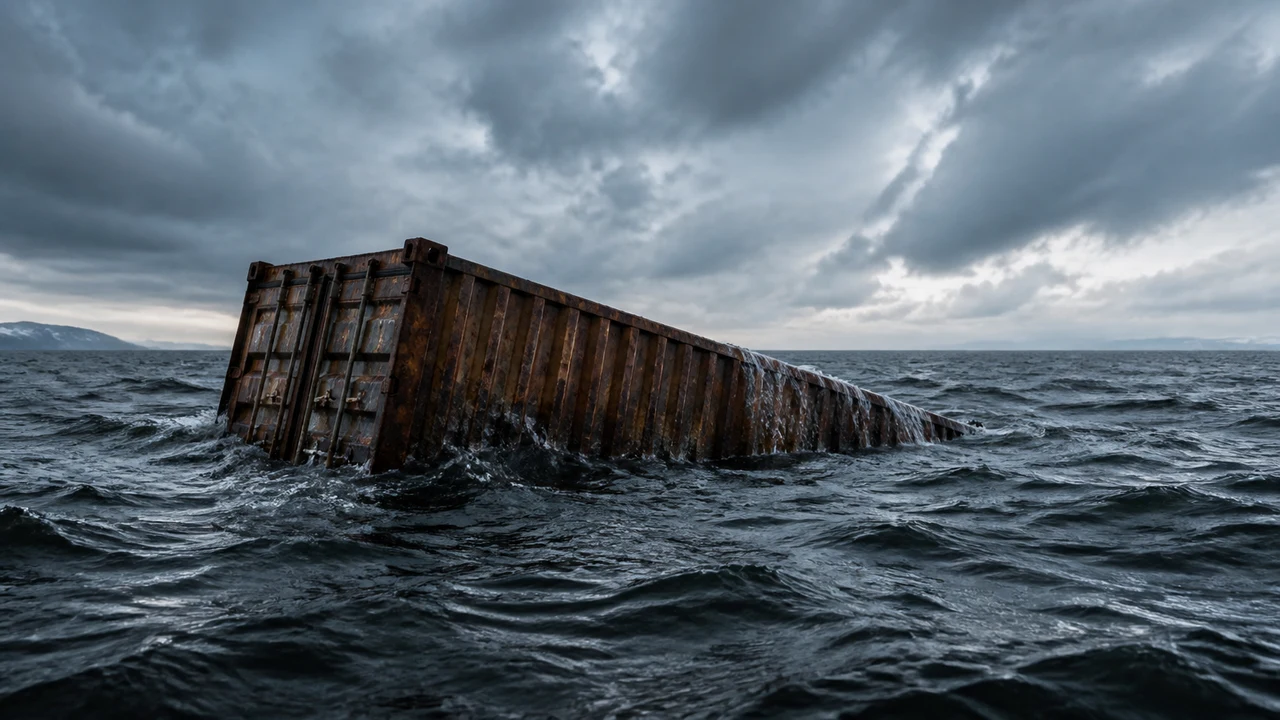
A container that goes overboard does not sink straight away. Depending on its cargo, it can float partly submerged for months — almost invisible on radar and detectable by eye only from a few dozen metres away. For a smaller vessel or a yacht, hitting one means hull damage in open water.
A classic example is the 2021 incident involving the Zim Kingston off the Canadian coast: of the 109 containers that went overboard, most simply vanished without trace. Relatively little washed ashore — the rest stayed at sea.
The second aspect is the environment. Containers often hold plastic pellets, chemicals and consumer goods that break down and end up on the coastline and in the food chain. Without a reporting duty, it was not even clear where to start looking.
Figures that will finally be accurate
In June this year the World Shipping Council published its latest review: around 1,478 containers were lost at sea in 2025 out of roughly 280 million moved. That is 0.0005% of all movements — statistically negligible, but the trend is telling:
- 2020 — 3,924
- 2021 — 2,301
- 2022 — 661
- 2023 — 221 (the lowest figure on record)
- 2024 — 576
- 2025 — 1,478
The reason for the rise is geography: after the situation in the Red Sea, ships shifted en masse to the route around the Cape of Good Hope, where voyage numbers grew by almost 200%. A longer route and harsher weather mean more cargo lost.
And here is the important part: until now these numbers were voluntarily compiled data from WSC members. From this year they become official, mandatory statistics with national authorities involved.
What it means in practice
For the industry it means three things. First, transparency — insurers and charterers will for the first time see the real picture rather than estimates. Second, pressure on the quality of cargo securing: once every loss is recorded, the statistics start to affect premiums and reputation. Third, safer navigation — warnings about drifting objects will reach other ships in real time.
Indirectly, it also touches the land-based market. A container is an asset with a history, and the more transparent the industry becomes, the more weight is carried by documented condition and traceable origin. For a buyer choosing a container for a warehouse or a site, that means one thing: questions about age, condition and previous use are not a formality, but normal practice in a market that keeps getting more transparent.